

A clear closeout list protects the small details from getting lost in a long conversation.Dan · Owner, BH Builders
 “The cabinet is wrong” is a difficult punch-list item to act on. “The upper drawer beside the refrigerator rubs the door when opened” gives me a location and an observable problem. That difference matters at the end of a Denver remodel. I want the walkthrough to produce a short, clear work list with responsibility and a way to verify completion. It should help us finish the project, not become a collection of vague impressions nobody can close.
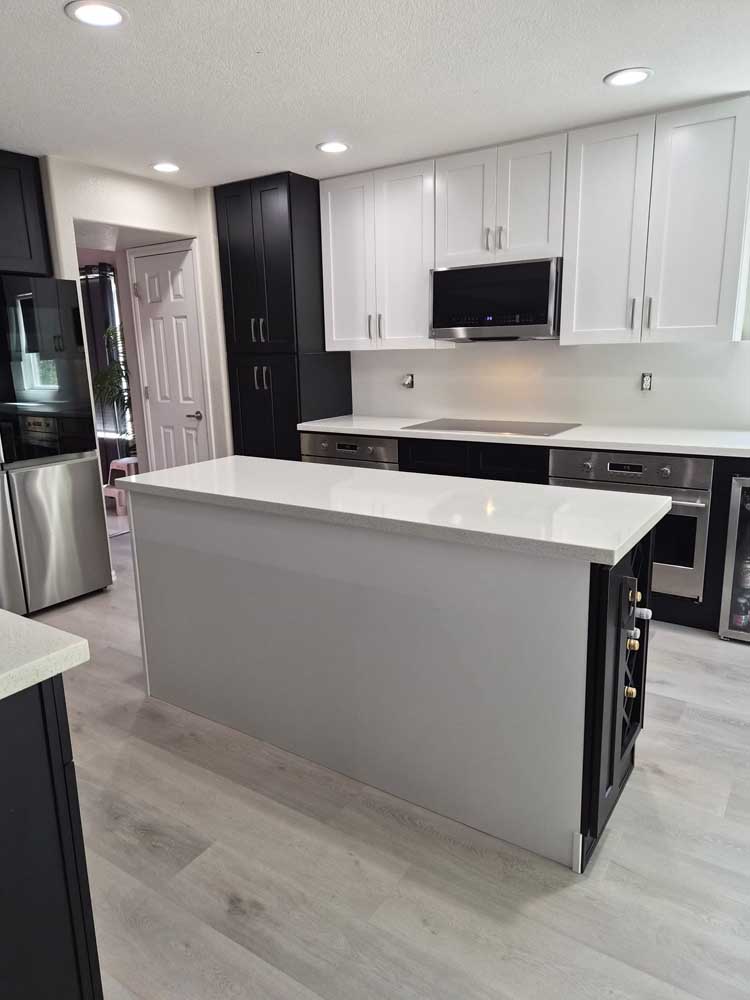
The featured photograph shows completed kitchen with island, cabinetry and contrasting finishes. We are using this documented BH Builders project image to show the surrounding remodeling context. It does not establish a hidden material, product rating or installation detail discussed below.
We use the list to finish defined work
A punch list records incomplete or unsatisfactory items identified during a review of the agreed work. We keep it connected to the scope, selections, and approved changes. That makes the conversation fairer for the homeowner and the trades. If you want a new shelf that was never included, we still want to hear about it, but we identify it as a new request rather than mixing it silently into a correction list.
 The National Association of Home Builders' construction-management resources include final-walkthrough and completion checklists. We use the same practical idea: inspect systematically and document what remains. The contract and applicable project requirements still govern completion and payment; this article does not rewrite them.
We prepare the room for a useful walkthrough
We need enough light and access to see and operate the work. We prefer a review after routine cleanup, with product information and the selection record available. If a surface is still covered for protection, we identify when it can be reviewed safely. We do not want a homeowner pressured to accept something they have not been able to inspect.
- We bring the agreed scope and current selection information.
- We use a consistent room order instead of jumping between concerns.
- We make one person responsible for maintaining the shared list.
- We distinguish inaccessible or unfinished areas from areas actually reviewed.
We write what someone can verify
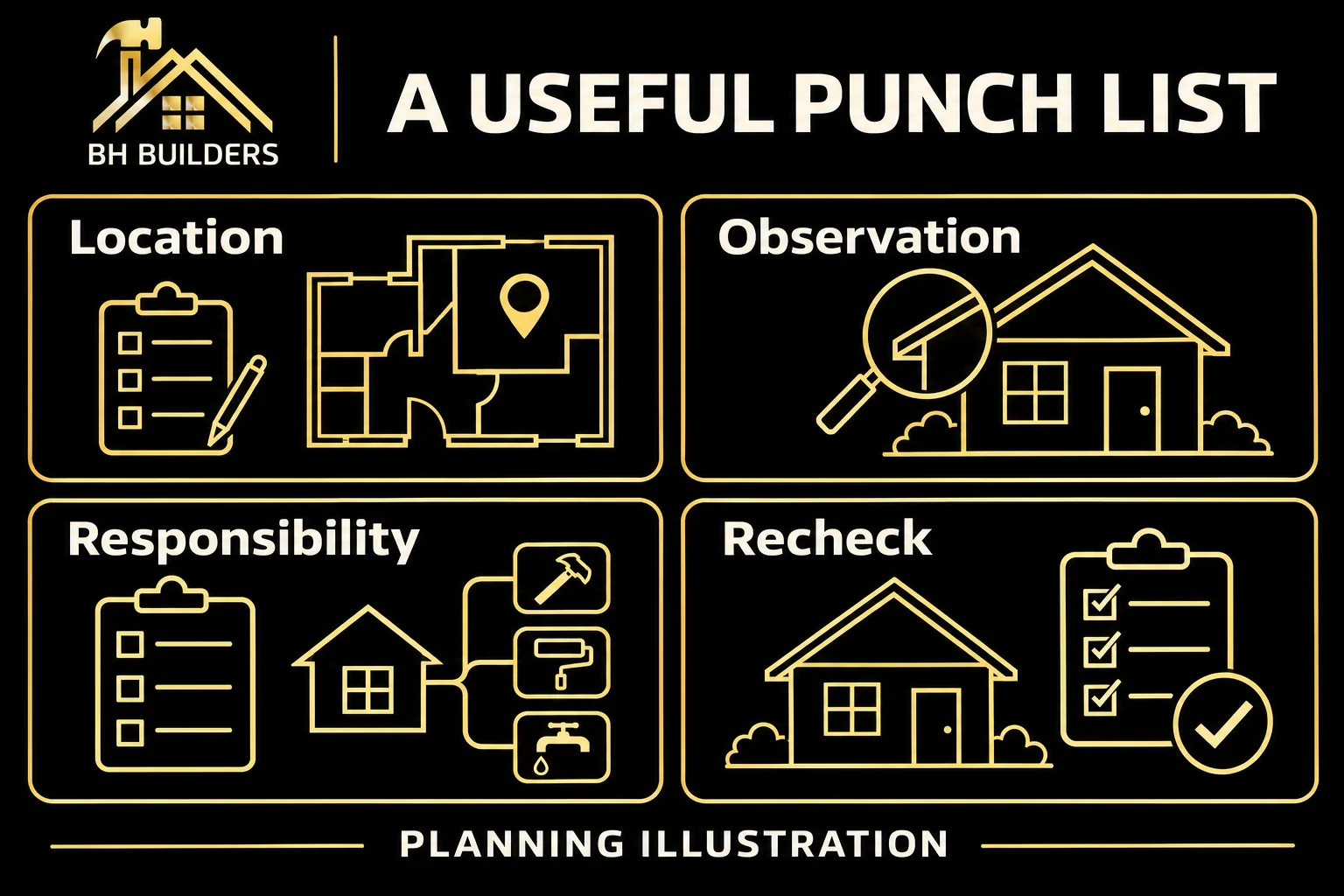
 A useful item describes location, observation, and the expected next step. It does not need an angry adjective or a diagnosis the homeowner cannot confirm. If a door sticks, we record where and when it sticks. The responsible trade can then determine the appropriate correction.
| Vague note | Useful observation |
|---|---|
| Paint looks bad | Visible missed paint at the lower left corner of the hallway door casing |
| Drawer problem | Drawer immediately right of the sink contacts the adjacent pull |
| Light does not work | Dining-area pendant does not turn on from the labeled wall control |
| Missing paperwork | Selected faucet model and care instructions are absent from the handoff folder |
We keep different kinds of issues separate
A cosmetic touch-up, an operating problem, and an unresolved safety concern should not all be treated as equivalent checkboxes. We identify urgent concerns and have the appropriate professional address them. We also separate questions from confirmed corrections. Sometimes the first action is to explain a control or check a selection, not to replace a product.
We record disagreements plainly
If we disagree about an item, we keep the observation and the point of disagreement visible. We refer back to the scope, approved sample, or relevant product information. We would rather have a clearly identified open question than mark an item complete simply because a conversation became uncomfortable.
We give each photo a job
We take a wide photograph to establish the location and a close one to show the issue. The item number connects both images to the list. A camera roll full of isolated scratches is much harder to use than a small set of labeled observations.
Our walkthrough moves through the room deliberately
We use a repeatable order so ordinary operating checks do not disappear behind the most visible paint touch-up.
- We identify the room and confirm which work is ready for review.
- We inspect visible finishes from normal viewing positions and note specific concerns.
- We operate doors, drawers, controls, and other agreed components.
- We review missing selections, documents, or demonstrations.
- We read the recorded items back with the homeowner before leaving the room.
 Our remodel timeline guide places closeout within the larger project. We do not treat the walkthrough as a surprise inspection invented at the end. The team should know how completion will be reviewed while there is still time to plan for it.
Every open item needs a next action
We assign responsibility and an expected next step, including any dependency. A replacement part may need ordering; an adjustment may need the installer back on site. We want the homeowner to know the status without having to ask three different people. If a date changes, we update the list and explain the reason instead of leaving an old promise sitting beside the item.
| Field | Why we keep it |
|---|---|
| Item number and location | Everyone can identify the same concern |
| Observation and agreed action | The correction has a defined purpose |
| Responsible person | The next step has an owner |
| Status and recheck | Completion is verified rather than assumed |
A closed item has evidence
 “The painter was here” does not establish that the listed touch-up is complete. We want the specific location checked after the work. For operating issues, that means operating the item again. For missing documents, it means locating and opening the file. We keep the original observation in the record so the reason for the correction remains understandable.
If you are choosing a contractor, our contractor-vetting guide covers the broader selection process. Asking how the contractor manages closeout is a useful part of that conversation, but it should produce a concrete process rather than a promise that there will never be a punch item.
We finish with one shared version
 We avoid separate lists in email, text messages, and paper notebooks once the main review begins. New observations should join the same record.
- We confirm which items are complete and how they were checked.
- We identify unresolved items, responsibilities, and next review dates.
- We provide the updated list to the homeowner.
- We keep new scope requests and later warranty questions clearly identified.
For a Lone Tree renovation, I want closeout to feel organized. Bring your observations, and I will help turn them into a list that tells the team exactly what still needs attention.
Keep reading from the BH Builders blog
I want a punch item to describe a correction someone can actually finish.Dan · Owner, BH Builders
Planning a project of your own?
Free, no-pressure estimates across the Denver metro, and four instant calculators.
📞 Call (720) 980-3913 Schedule a Free Meeting