
The big picture: where Denver's cranes are pointing
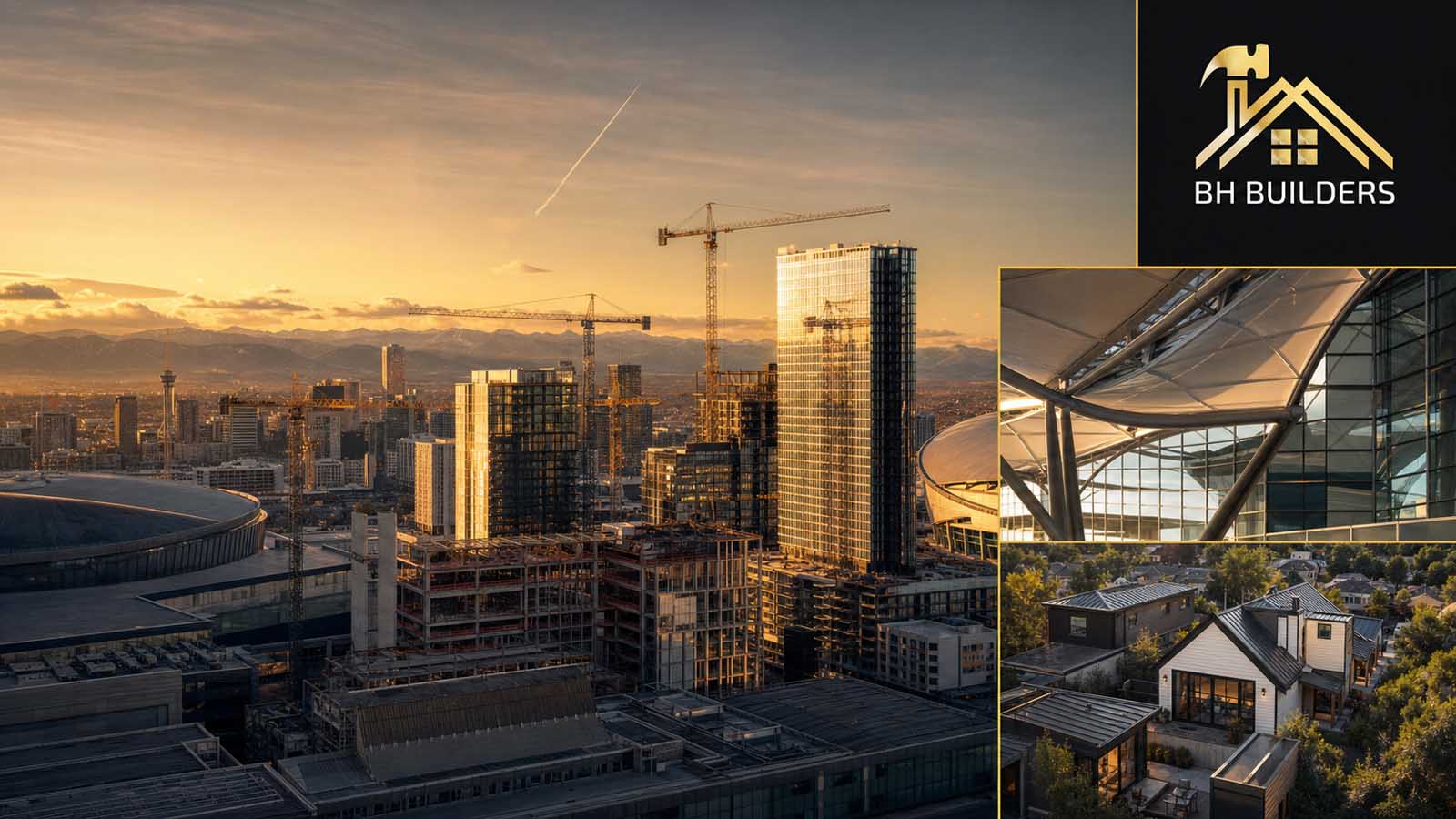
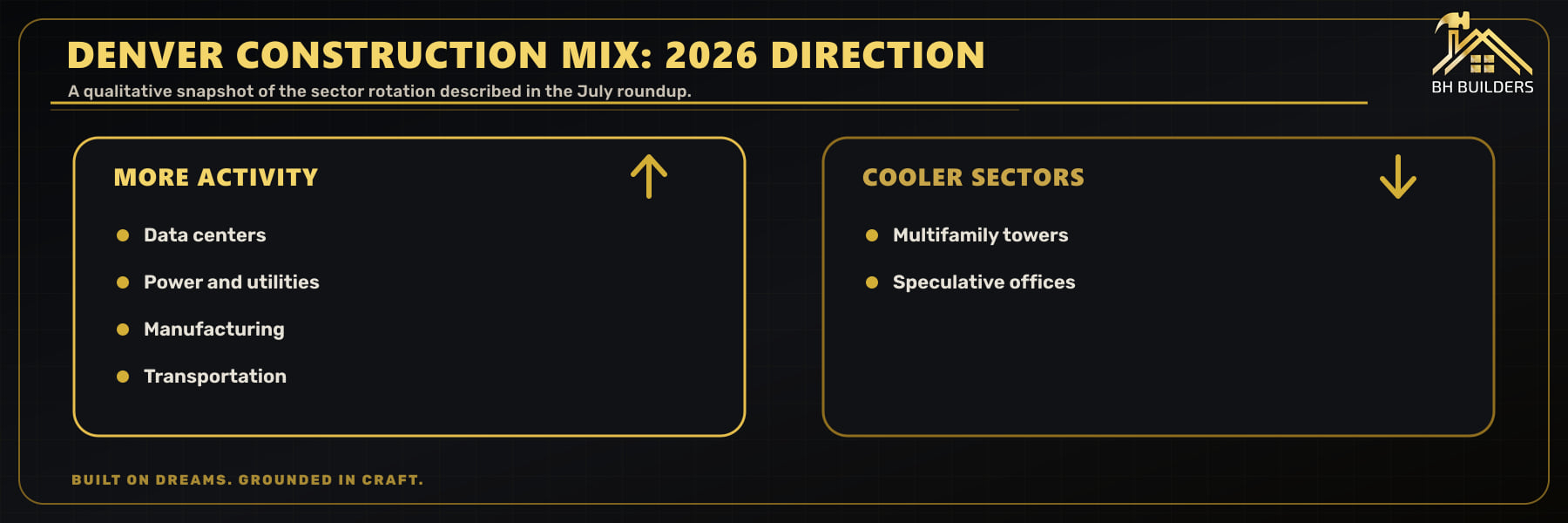
 Denver's construction economy is rotating, not shrinking. Industry forecasting shows the value of Denver project starts predicted to increase in 2026, but the mix is shifting hard: multifamily towers and office projects have cooled while data centers, power and utility infrastructure, manufacturing and transportation work are growing fast. Public money is a major engine too — recent education bond approvals put roughly $5.5 billion of school construction into the regional pipeline.
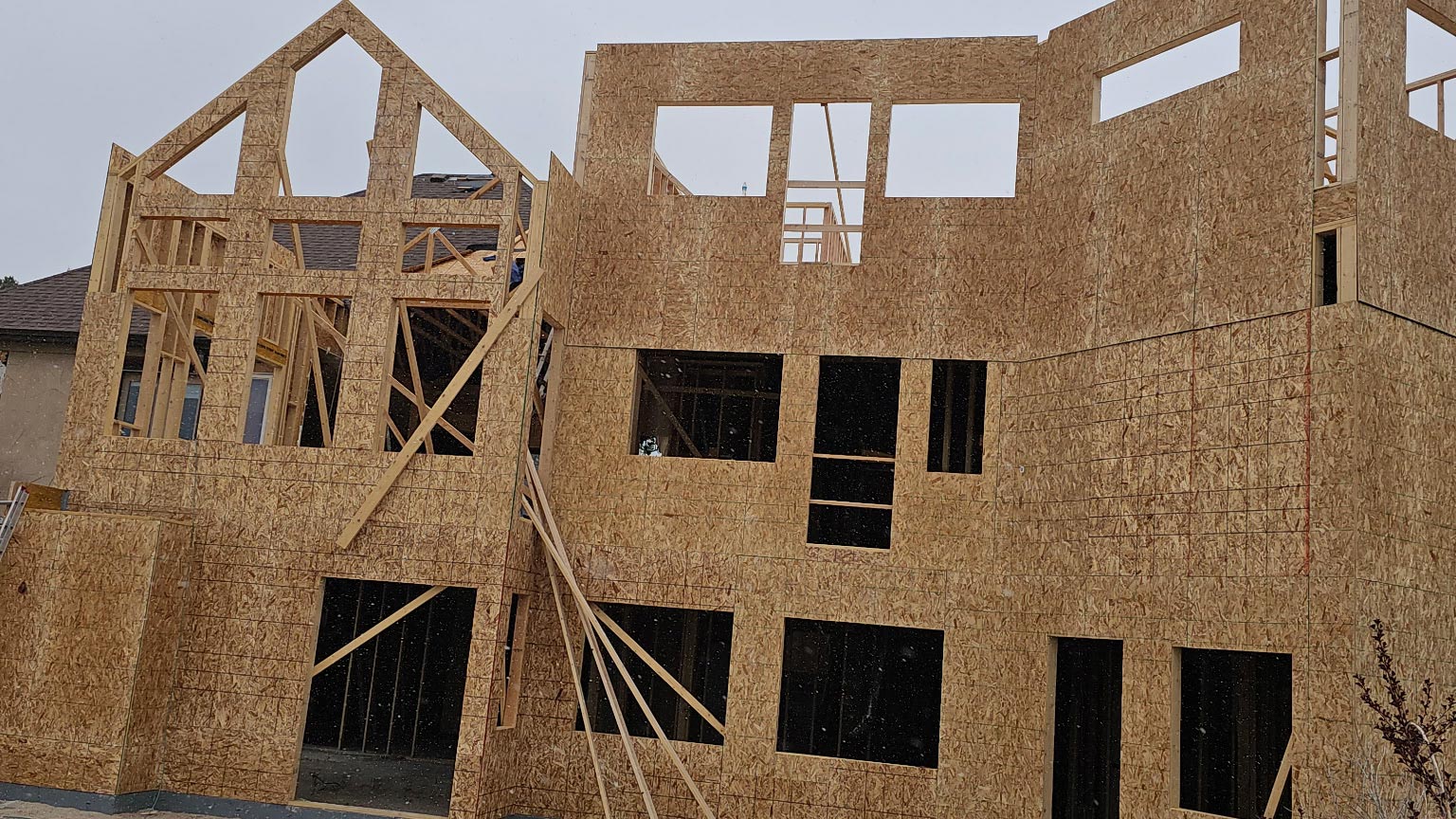
For homeowners, that rotation matters in a practical way: while commercial framing crews chase mega-projects, residential remodeling capacity in the metro stays competitive — and the neighborhoods around the big projects below are exactly where home improvements tend to pay off fastest.
The projects reshaping the metro
- Ball Arena redevelopment. The parking seas around the arena are set to become a genuine mini-downtown over a ~25-year buildout, with more than 6,000 apartments planned in the heart of the city. Every phase pulls trades, materials and eventually residents into the core.
- Cherry Creek West. The west edge of Cherry Creek's shopping district is being remade into a walkable mixed-use quarter — one of the metro's most watched infill projects.
- Denver International Airport. The Great Hall overhaul, new security checkpoints and Peña Boulevard roadway work continue DIA's decade-long modernization — a steady drumbeat of contracts tracked on Denver's official project pages.
- Transit & roads. CDOT's Denver-metro program and RTD's project slate keep corridor work rolling across the region — the quiet kind of construction that changes commute times and, with them, home values.
 Contractors and subs hunting public work should watch the city's future construction solicitations page, where upcoming bid opportunities are posted before they hit the street.
The homeowner opportunity of the year: ADUs
The rulebook for accessory dwelling units keeps tilting in homeowners' favor. Denver now allows ADUs in every zone that permits single-family homes, with detached units up to 1,000 square feet in most residential zones, no minimum lot size, no owner-occupancy requirement and no added parking mandate — details on the city's official ADU permitting page. Statewide, HB24-1152 stripped HOAs of the power to ban ADUs outright in covered cities, though reasonable aesthetic standards still apply.
 The practical translation: if you own a Denver-metro lot, the cheapest "new construction opportunity" in this whole roundup may be under your own roof. A basement converted to a legal income suite — egress window, full bath, kitchenette, fire-and-sound separation, private entrance — rents in most metro neighborhoods for enough to service a good chunk of a HELOC. Our Dream Basement Builder prices the full rental-unit bundle in about a minute, and our additions page covers the detached-ADU path.
Permit timelines: the number to plan around
The less fun news: Denver's residential permit queue is real. The city's 2026 target caps residential reviews at 180 days, and majors like additions and ADUs routinely run four to seven months from application to issued permit. Simple interior remodels move much faster — see the city's interior remodel guidance — and suburban jurisdictions (Greenwood Village, Centennial, Littleton, Lakewood) generally turn permits around faster than the big city.
 The strategic takeaway we give every client: the permit clock, not the construction clock, sets your move-in date. If you want an addition breaking ground next spring, design and file this fall. We handle the entire permitting process on every project — it's built into our pricing.
What this means for your project
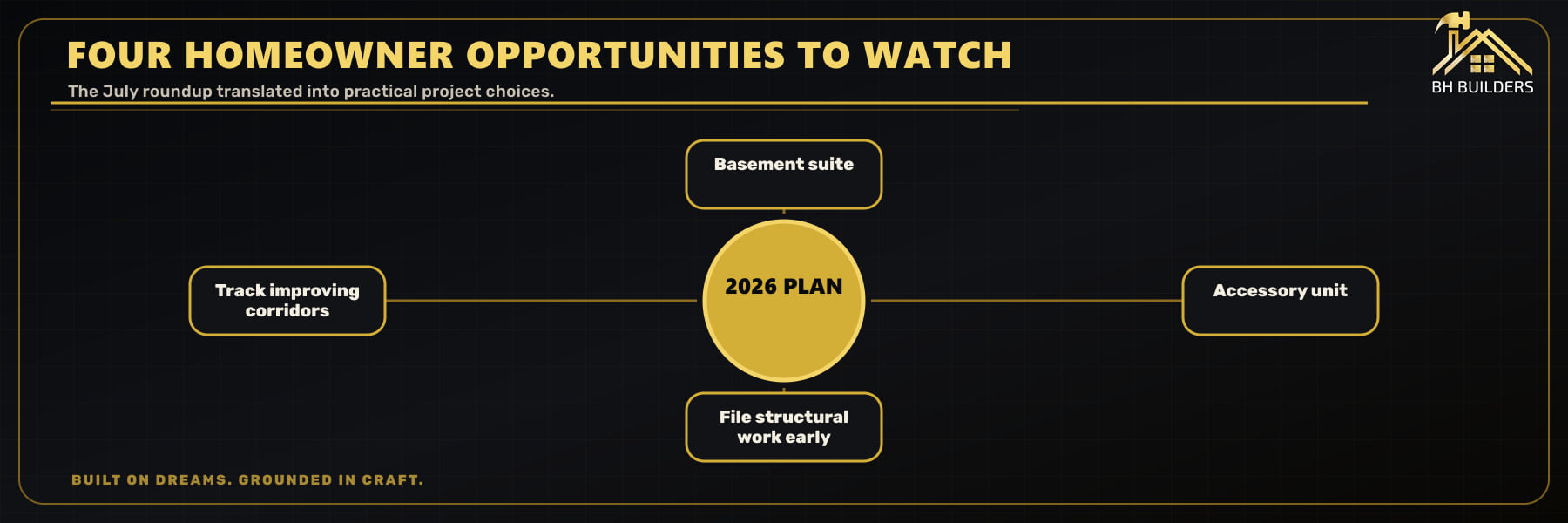
- Basement income suites are the value play of 2026 — friendlier rules, strong rents, and the space already exists. Start with radon and egress; we design around both.
- File early for anything structural. Permit queues are the long pole. Winter design = spring groundbreaking.
- Watch the corridors. Homes near the Ball Arena district, Cherry Creek West and improving transit corridors are the metro's appreciation candidates — remodel dollars go furthest where the neighborhood is already rising.
- Lock trades before the mega-projects do. Data centers and schools will absorb a lot of regional labor through 2027. A signed, scheduled remodel beats a someday remodel.
Questions about how any of this touches your house? Call (720) 980-3913 — straight answers are free.
Keep reading from the BH Builders blog
I read the permit reports the way other people read box scores. When you know what the city is building, you know what your block will be worth — and when to start your own project.DT · Owner, BH Builders
Planning a project of your own?
Free, no-pressure estimates across the Denver metro — and four instant calculators.
📞 Call (720) 980-3913 Schedule a Free Meeting