

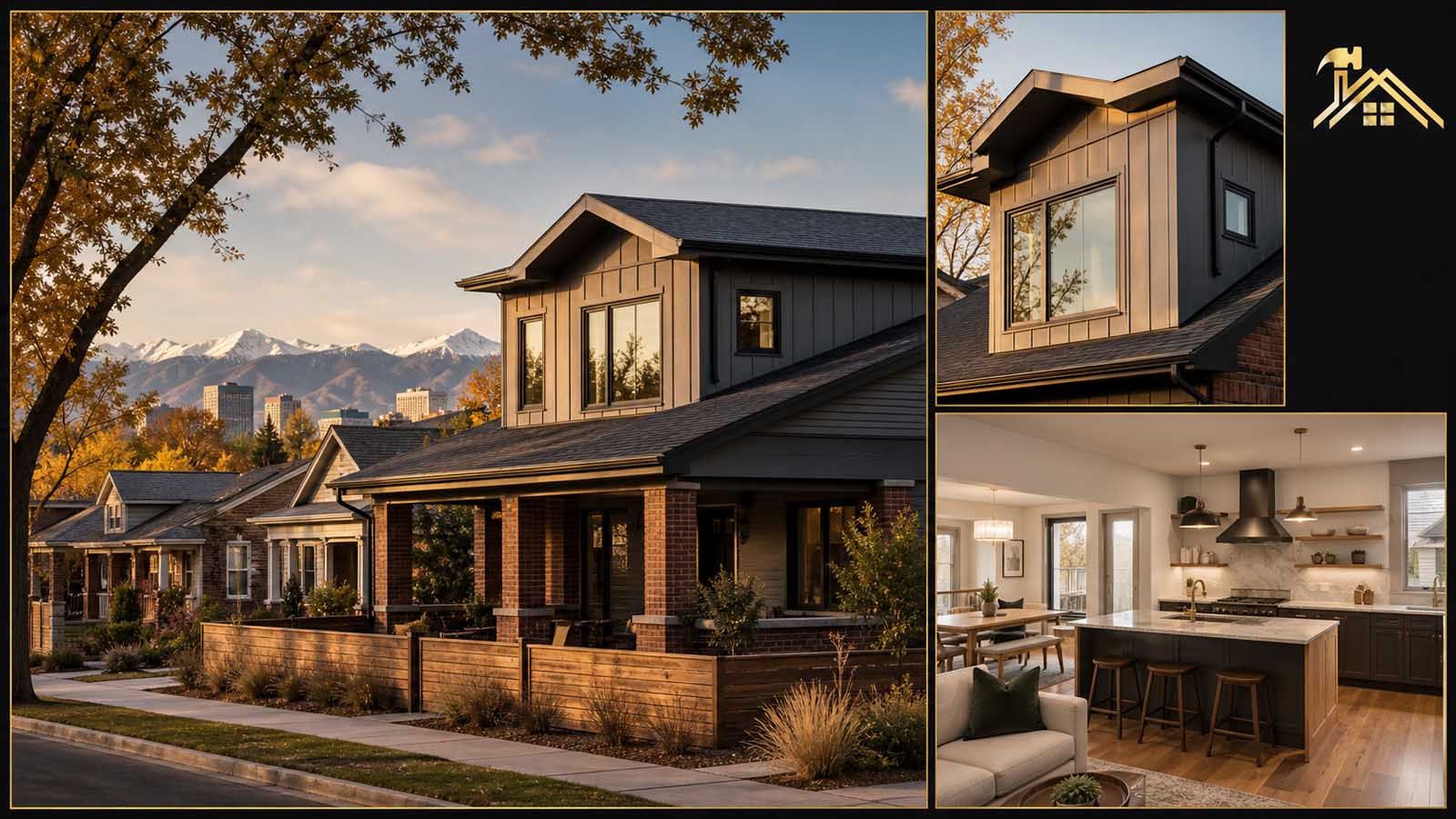
 Denver real estate investors live and die on the renovation line item. The purchase price is set by the market and the exit is set by the appraiser — the remodel in the middle is the only part of the deal you actually control. This guide covers how investor remodels work in the Denver metro: which fix-and-flip scopes pencil, what a BRRRR rehab needs to survive a refinance appraisal, where ADU income changed the math, and the local costs and permit realities that decide whether a deal works on paper and in drywall dust.
Why value-add still works in the Denver metro
Denver's housing stock does investors a favor: whole neighborhoods of structurally sound ranches and two-stories from the 1950s–1990s with unfinished basements, dated kitchens and tired exteriors. That combination — good bones, ugly finishes — is exactly what a value-add strategy wants, because you're paying for problems that labor and materials can fix on a schedule.
 Two local shifts matter for anyone underwriting deals right now:
- ADUs opened up. Colorado's HB24-1152 pushed metro cities to allow accessory dwelling units on single-family lots, and Denver already allows them citywide. A lot that supported one door in 2023 may support two today — see our permit guide for where each city stands.
- Unpermitted work gets caught. Lenders, appraisers and buyers' inspectors all flag it, and unpermitted square footage can appraise at zero. Investors who cut permits to save weeks routinely give the savings back at exit — with interest.
Investors ask me for cheap. What they actually need is predictable — a number that holds, a schedule that holds, and work that passes inspection the first time. Cheap that fails an appraisal is the most expensive thing you can buy.
DT · Owner, BH Builders
Fix-and-flip: the three scopes that pencil
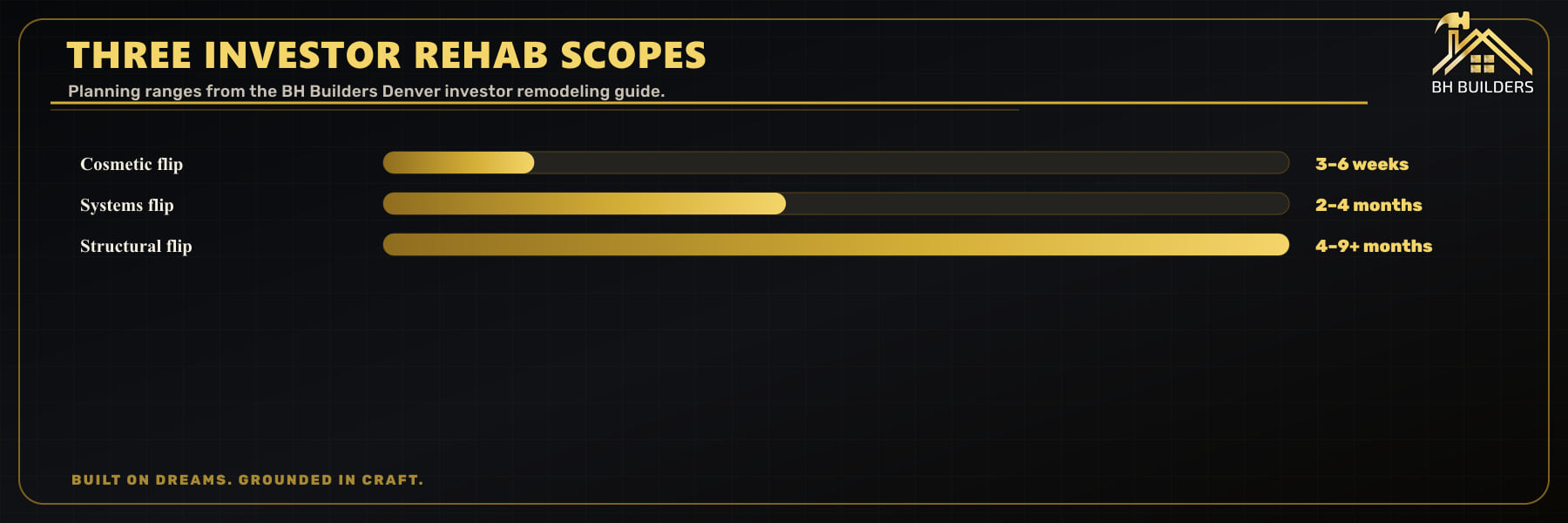
 Every flip renovation in the Denver metro lands in one of three buckets. Knowing which one your deal needs — before you write the offer — is most of the underwriting.
| Scope | What it covers | Typical timeline | When it pencils |
|---|---|---|---|
| Cosmetic flip | Paint, flooring, fixtures, hardware, landscaping — no walls move, no trades rough-in | 3–6 weeks | Sound houses that only look dated; tightest margins, fastest turns |
| Systems flip | Cosmetic scope plus kitchen and bath remodels, panel or water-heater upgrades, roof if needed | 2–4 months | The Denver sweet spot — the after-repair value jump usually outruns the added cost |
| Structural flip | Layout changes, additions, foundation or full-gut work with engineering | 4–9+ months | Only with a deep discount at purchase and an experienced contractor — the risk lives here |
Where investors get hurt is scope creep between buckets: a "cosmetic" flip that opens a wall and finds aluminum wiring is now a systems flip on a cosmetic budget. A pre-offer walkthrough with a contractor costs you nothing — ours are free — and moves the surprise from month two to day zero.
BRRRR rehabs: renovate for the refinance appraiser
The BRRRR strategy — buy, rehab, rent, refinance, repeat — only recycles your capital if the refinance appraisal comes in. That changes what the rehab should look like. A flip renovates for a buyer's eyes; a BRRRR renovates for an appraiser's comp sheet and a tenant's wear-and-tear.
What that means in practice:
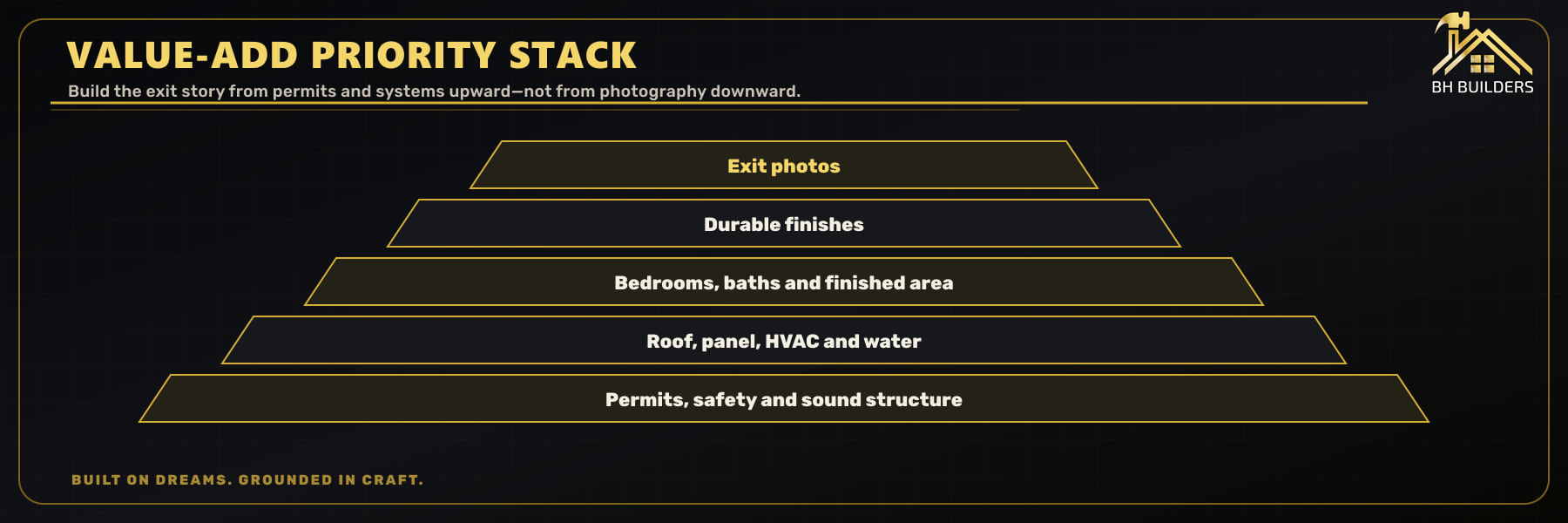
- Spend where comps count: bedroom count (a basement bedroom needs a legal egress window), bathroom count, and finished square footage move appraisals. Imported tile does not.
- Choose tenant-proof materials: LVP over site-finished hardwood, quartz over marble, semi-gloss in the wet rooms. Durable reads as "well-maintained" at every future inspection.
- Document everything: permits, inspection sign-offs and a line-item scope make the appraiser's job easy and defensible. Our estimates are line-itemed for exactly this reason — run a scope yourself to see the format.
Value-add rentals: the improvements tenants pay for
 Not every dollar of renovation raises rent. Denver tenants pay up for a second bathroom, in-unit laundry, air conditioning, a finished basement room and covered parking. They rarely pay more for premium counters or designer lighting. The value-add playbook is boring on purpose:
- Add a conforming bedroom where square footage allows — usually in a basement with an egress window. This is the single biggest rent lever in most Denver-metro houses.
- Add or restore a bathroom. A basement three-quarter bath turns "3 bed / 1 bath" into a different listing entirely. Bathroom starting prices here.
- Kill deferred maintenance — roof, water heater, panel. Nothing eats rental cash flow like emergency trade calls, and insurers increasingly price old roofs into premiums in hail country.
- Refresh, don't remodel, the kitchen unless the layout fails. Paint-grade refacing, new counters and hardware carry a rental kitchen for another decade.
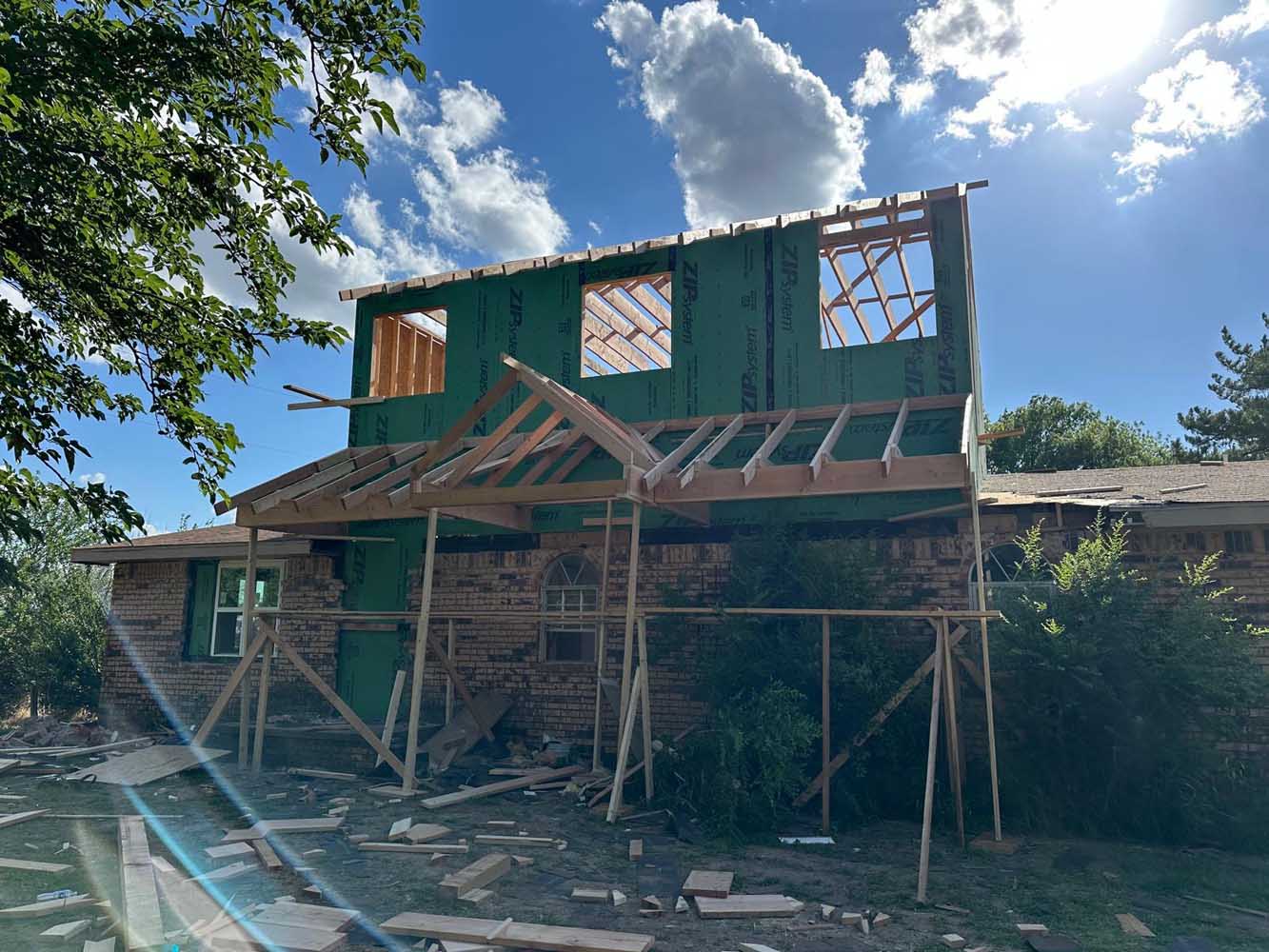
On a rental, I tell investors to spend on the things a tenant touches every day and an inspector checks every visit. The pretty stuff you can add later. The bones you fix once, properly, while the walls are already open.
DT · Owner, BH Builders
ADU income: the newest line on the pro forma
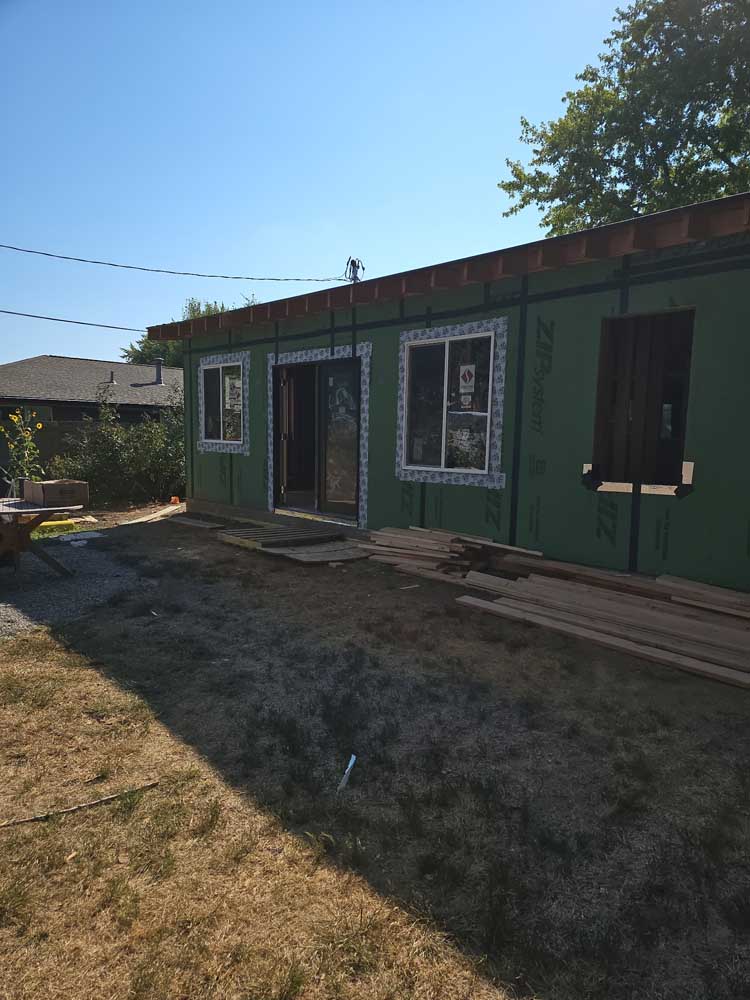
 Accessory dwelling units are the biggest change to Denver investor math in years. One lot, two rent checks — either a basement conversion inside the existing envelope or a detached unit in the yard. Since Colorado's ADU law took effect, most metro cities must allow them on single-family lots, though size, height and design standards still vary city by city.
| Basement conversion | Detached ADU | |
|---|---|---|
| Typical cost | Lower — the structure exists; you're finishing, separating utilities and adding egress | Higher — it's a small new house: foundation, envelope, utilities, everything |
| Timeline | Weeks to a few months | Several months including zoning and full plan review |
| Privacy & rent | Shared structure; rents below a detached unit | Own entrance and walls; strongest rent and resale story |
| Permit path | Basement finish + egress; the fastest ADU-ish play | Zoning verification first, then full building review — see the permit guide |
Run your own numbers with our New Building & ADU calculator — it prices the build and shows a market-based rent range next to it, so the pro forma and the construction budget come from the same sheet.
Investor budget benchmarks (our real starting prices)
 These are the same starting prices we publish for homeowners — investors get the same math. Every project is a range until we walk it, but underwriting needs anchors:
| Project | Starting at | Investor use case |
|---|---|---|
| Bathroom remodel | $12K | The highest-frequency flip and rental line item |
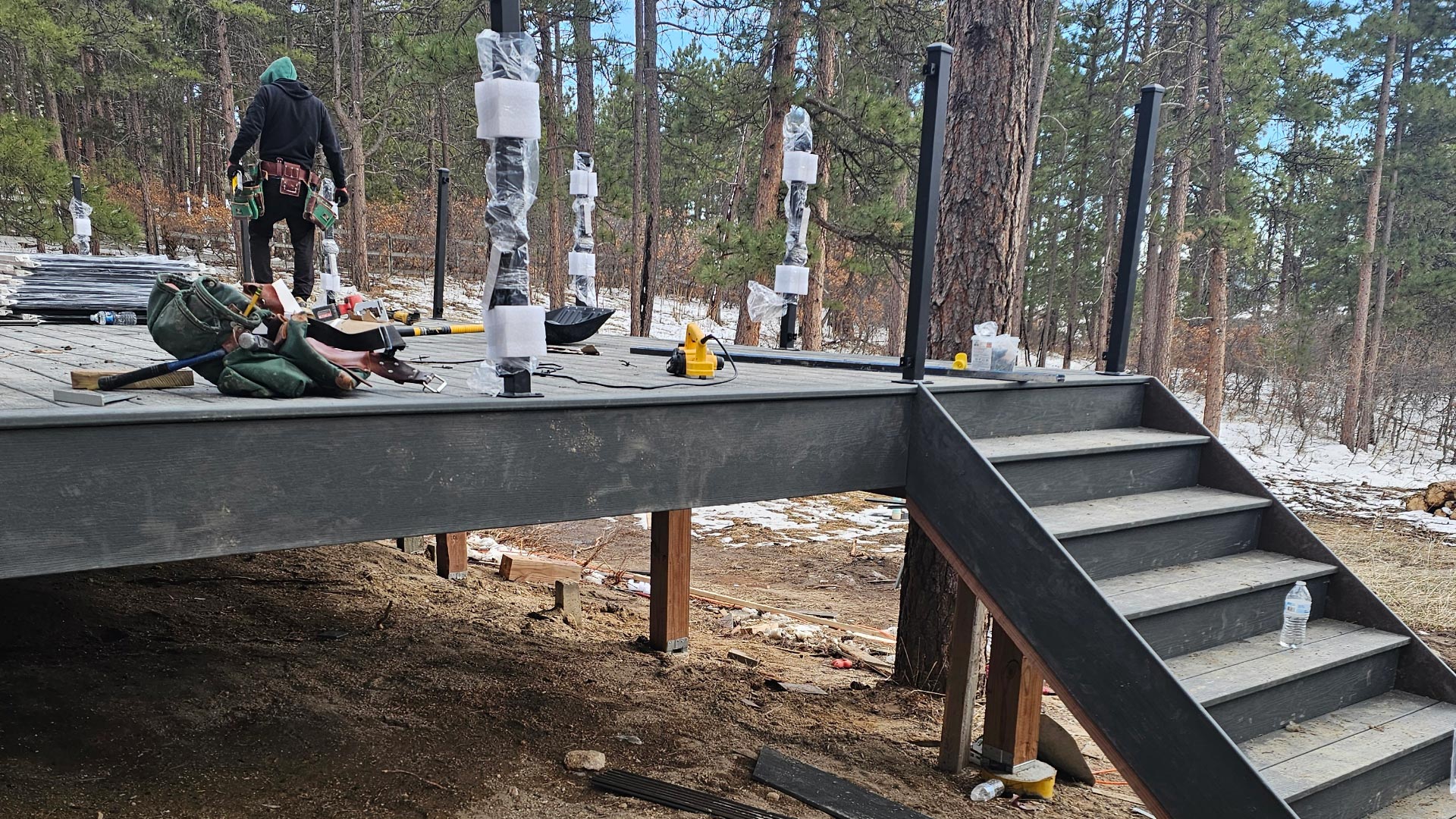
| Deck | $15K | Exit-photo value; outdoor living comps well |
| Exterior refresh | $15K | Curb appeal drives the first showing |
| Kitchen remodel | $35K | The systems-flip centerpiece |
| Basement finish | $50K | Bedrooms + bath = the biggest appraisal jump per dollar |
| Whole-home renovation | $60K | Full repositioning under one permit set |
| Addition | $100K | Square footage when the comps support it |
| New building / ADU | $100K | Second income stream on one lot |
All nine of our cost calculators run on these same rates, line-itemed — useful for sanity-checking a deal at 10pm before an offer deadline. Full pricing logic is on the pricing page.
Permits are exit protection, not red tape
 Investors feel permit timelines more than homeowners because every week is a holding cost. The temptation to skip is real, and it's a trap: the bill for unpermitted work arrives at the worst moment — the sale. Buyers' inspectors flag it, lenders balk, appraisers discount it, and retroactive permits mean inspecting finished work through fresh holes in fresh drywall.
The smarter play is to make permits part of the schedule, not an obstacle to it. Every metro city now takes electronic submittals — Denver runs everything through Community Planning and Development's e-permits system — and clean, complete plan sets move measurably faster in review. Our Denver-metro permit guide covers all 13 jurisdictions we work in, with a free fee-estimator tool and the official documents mirrored for download.
DT · Owner, BH Builders
I've legalized other people's shortcuts more than once. It always costs more than the permit would have — and it always happens during a sale, when the investor has the least time and the least leverage.
Five mistakes Denver investors make on remodels
- Underwriting from national cost data. Denver labor, hail-rated roofing and below-grade egress work don't match national averages. Use local anchors.
- Scoping without a contractor walkthrough. The $0 walkthrough before the offer beats the $30K surprise after closing, every time.
- Over-improving for the block. The appraiser comps you against the street, not against your Pinterest board. Match the neighborhood ceiling, don't set it.
- Treating the basement as bonus space. Without egress and permits it's storage; with them it's bedrooms, a bath and the biggest value jump in the house.
- Chasing the lowest bid. A bid 30% under the field isn't a bargain — it's a scope that's missing something you'll pay for mid-project, when changing contractors costs the most.
How we work with investors
BH Builders is a licensed, insured general contractor in Greenwood Village serving the Denver metro. For investor clients that means: a free pre-offer walkthrough when you're moving on a property, a written line-item scope that maps to your underwriting, permits pulled under our license, milestone scheduling you can share with a lender, and one point of contact from demo to punch list. Whether it's one flip or a portfolio of rentals, the process is the same — see recent projects or call (720) 980-3913.
Denver investor remodeling FAQ
What renovation adds the most value to a Denver flip?
 Per dollar spent, finishing a basement with a conforming bedroom and bathroom usually beats everything else — it adds bedroom count, bathroom count and finished square footage, the three levers appraisers weigh most. Kitchens matter for buyer emotion; basements move the comp math.
Do I need permits for a fix-and-flip in Denver?
Yes — the same work triggers the same permits whether the owner lives there or not: structural changes, plumbing, gas, electrical, egress, roofing, water heaters. Unpermitted work surfaces during the sale, where it costs the most. Our permit guide shows what each metro city requires.
Can I add an ADU to a rental property in Denver?
 Denver allows ADUs citywide, and Colorado's HB24-1152 pushed most metro cities to allow them on single-family lots — with size, height and design standards that vary by city. Zoning verification on your specific lot is step one; we handle that as part of every ADU project.
How fast can a systems-level flip renovation go?
In the Denver metro, a kitchen-and-baths systems flip typically runs two to four months including permits, assuming decisions are made up front and selections don't change mid-stream. The schedule dies on change orders, not on labor.
Do you give investors different pricing than homeowners?
No — the math is the same and it's published. What repeat investors get is process: faster walkthroughs, scopes formatted for their lender, and scheduling that respects holding costs. The written estimate after a free walkthrough is exact and fixed either way.
Underwrite with real local anchors, renovate for the appraiser and the tenant before the photographer, and treat permits as exit protection. That's the whole playbook. When you have an address in hand, book a free walkthrough — before the offer, ideally.
Keep reading from the BH Builders blog
A flip is a construction project wearing a spreadsheet. Investors who respect the construction get to keep what the spreadsheet promised.DT · Owner, BH Builders
Planning a project of your own?
Free, no-pressure estimates across the Denver metro — and four instant calculators.
📞 Call (720) 980-3913 Schedule a Free Meeting