

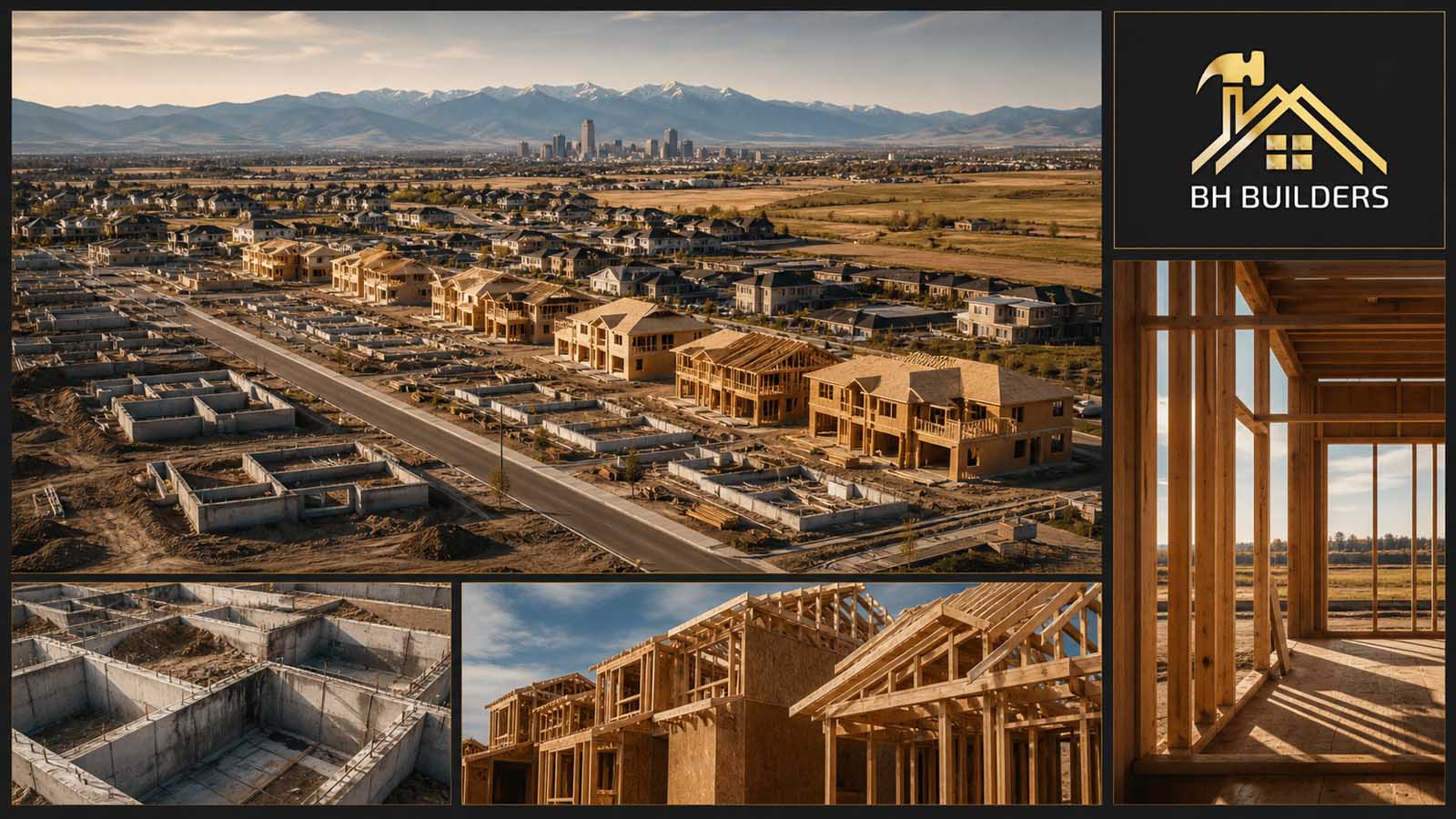
The big picture: money moving into what's already built
 There wasn't a headline tower announcement in the Denver metro this week. What there was instead: a city buying a parking-lot-sized piece of land to turn into a park, two Lakewood apartment complexes trading hands with renovation budgets attached, and rail crews still tearing up downtown track. Put together, it's the same story we've been watching all year — the money is going into fixing, converting and filling in, not into new ground-up construction.
Industry reporting has described the Denver construction market as steady through 2026, with healthcare and multifamily carrying most of the load while speculative development stays cautious. For a homeowner, "steady" is the word you want. It means subcontractors aren't being pulled off residential work by a boom, and it means material pricing isn't swinging month to month the way it did a few years back.
Denver wants a Golden Triangle park — and council votes this month
 The city is moving to buy a 0.4-acre lot at 1028 Acoma St. in the Golden Triangle, a former credit union branch site, and turn it into a neighborhood park. BusinessDen reports the price at $3 million, with a Denver City Council vote scheduled for later in July. The lot is owned by local developer Fred Glick and investors, who bought it in 2024 for $1.8 million. The city has been looking for a park site in that stretch between Civic Center Park and Sunken Gardens for years.
Why a homeowner should care about a third of an acre downtown: park additions are one of the more reliable signals that a neighborhood is being invested in rather than milked. If you own within walking distance of a new public amenity, that's the kind of thing appraisers eventually notice — and it's a reasonable time to think about whether your house is positioned to benefit.
Lakewood apartments trade — with renovation dollars attached
Two Lakewood multifamily deals closed in the most recent BusinessDen Pipeline:
- WestLink at Oak Station, a 244-unit complex at 1665 Pierson St., sold to TruAmerica Multifamily for $71.55 million. The buyer plans to renovate all of the units — new plumbing and lighting fixtures plus smart thermostats.
- Tiffany Square Apartments, at 935 Sheridan Blvd. and 5255 W. Ninth Ave., sold to Tiffany Square Preservation LP for $20 million.
- The Lodge at Red Rocks, a nursing home at 150 Spring St. in Morrison, sold for $17 million.
 The WestLink deal is worth reading twice. A buyer paid seventy-one and a half million dollars for a 1960s-era garden apartment property and then budgeted a full unit-by-unit interior renovation on top of it. That's a professional investor concluding that upgrading existing housing stock beats building new — the same math that applies to a Denver-area homeowner deciding between a move-up purchase and a remodel. If you're running that comparison, our Denver remodeling price ranges page lays out what real projects cost here.
Downtown rail work continues through late September
RTD's Downtown Rail Reconstruction — a multi-year, roughly $152 million rebuild of the agency's oldest light rail track — is in its Downtown Loop Midblocks phase, which started June 7 and runs into the first quarter of 2027. RTD's project page has the current impacts. Two that matter if you're driving or scheduling deliveries downtown:
- The sidewalk along westbound Colfax Avenue between Ninth Street and the 10th Street plaza is closed, shifting north of the tracks, through late September.
- A single-lane closure on westbound Colfax between Kalamath and Seventh streets runs through late September as well.
 Rail service is reshuffled too — the D, H and L lines are suspended during construction, with C Line service restored to Union Station, R Line extended to RidgeGate Parkway, a temporary T Line between Lincoln and I-25·Broadway, and Route 43 covering the downtown corridor. If your project involves crews or material trucks crossing downtown, build the detours into the schedule. Denver also keeps a running list of current transportation and infrastructure projects if you want to check your own street.
Permits and ADUs: the rules that actually affect your build
Nothing changed in Denver's ADU code this week, which is itself worth stating plainly, because a lot of online guides still describe the old rules. The current framework, following state HB24-1152 and Denver's own text amendment, allows an accessory dwelling unit in every zone district that allows a single-family home, with no minimum lot size, no owner-occupancy requirement for renting the ADU, and no parking space required for the unit itself. Denver's Citywide ADUs page is the authoritative source; don't take a blog's word for it, including ours.
 On timing: Denver publishes an average plan review times dashboard that updates regularly. Check it before you commit to a start date, not after. Every metro jurisdiction runs its own counter with its own queue — we keep the office details, fee links and submittal quirks for each one in the Denver metro permit guide.
Contractors and suppliers watching for public work can also track the city's Future Construction Solicitations listings, which is where Denver posts upcoming bid opportunities before they advertise.
What this means for your project
Four practical takeaways from this week:
- A steady market is a good market to build in. When starts are flat rather than booming, good subs have availability and bids hold longer. That's the opposite of what most homeowners assume.
- Follow the professional money. Investors are buying existing buildings and renovating them rather than building new. If that math works on a 244-unit complex, it usually works on a single house — finishing a basement or adding onto what you have almost always beats the cost per square foot of new construction. Our basement finishing calculator will get you a real number in a couple of minutes.
- Start the permit conversation early. Denver's review times are published and knowable. Design decisions that trigger a structural or zoning review add weeks — knowing that up front is the difference between a summer start and a fall one.
- If you're considering an ADU, the zoning is more permissive than most people think. No minimum lot size and no owner-occupancy requirement changed the calculus for a lot of Denver lots. Whether it pencils depends on your utilities, setbacks and alley access, which is a site-specific conversation — see home additions and ADUs for how we scope them.
 Planning something this year in Greenwood Village, Denver or anywhere in the metro? Call BH Builders at (720) 980-3913 and we'll walk your property, talk through what your jurisdiction will actually approve, and give you a straight number.
Keep reading from the BH Builders blog
The pros are buying buildings that already exist and putting their money into fixing them up. That is the same call most homeowners should be making about their own house.DT · Owner, BH Builders
Planning a project of your own?
Free, no-pressure estimates across the Denver metro — and four instant calculators.
📞 Call (720) 980-3913 Schedule a Free Meeting